Archiving And Records Management

Categories: Business Management
Wishlist Share
Share Course
Page Link
Share On Social Media

About Course

Archiving and records management is more than filing documents—it’s the system that safeguards information, ensures compliance, and supports organizational growth. Archiving and Records Management equips you with the knowledge to classify, maintain, and protect records with confidence, creating a reliable foundation for efficiency and accountability.

In today’s data-driven workplace, effective recordkeeping builds trust, transparency, and order. Without it, vital information gets lost, compliance risks increase, and productivity slows. With it, organizations preserve history, streamline access, and operate with clarity and control.

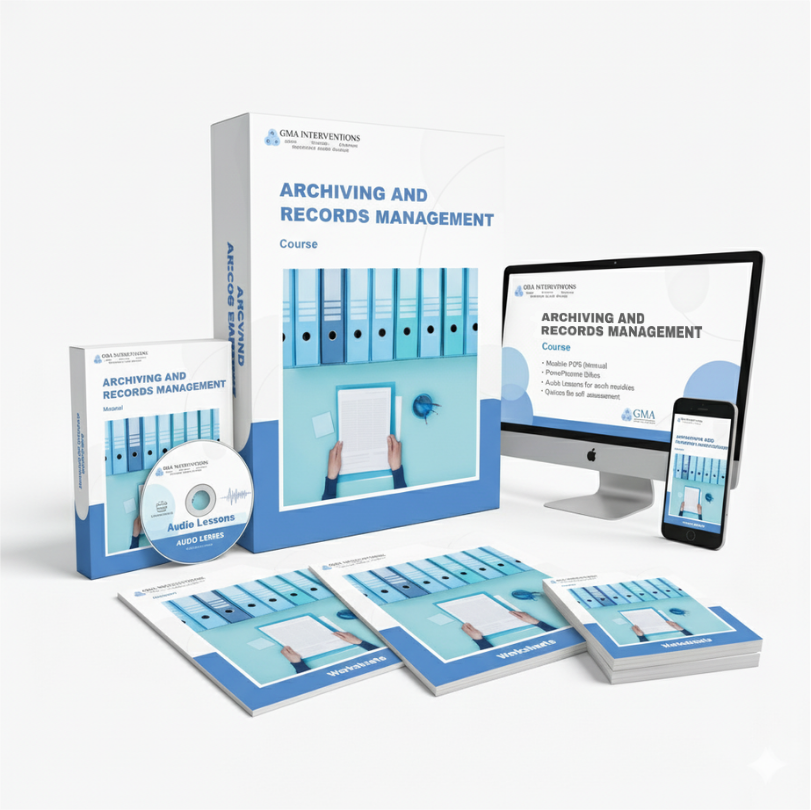
This course breaks down the core practices of records management into twelve clear, practical modules. Each lesson includes a manual, tools, and exercises to help you apply techniques directly to your work.

What you will learn:

  • Identify, classify, and manage records across paper, electronic, and hybrid systems.

  • Understand the life cycle of records and implement retention and disposal strategies.

  • Create secure archives that meet legal, historical, and organizational needs.

  • Apply appraisal and risk assessment techniques to safeguard critical information.

  • Use practical systems and tools to ensure accuracy, compliance, and accessibility.

🎯 Who is this course for?

  • New professionals seeking a solid foundation in recordkeeping and archiving.

  • Office staff responsible for maintaining accurate records and compliance.

  • Managers and administrators looking to strengthen organizational systems.

  • Anyone transitioning into records management roles who wants clear, structured guidance.

Show More

What Will You Learn?

  • Define records, archives, and their life cycle.
  • Analyze and classify records by context, function, and process.
  • Apply systems for paper, electronic, and hybrid records.
  • Conduct appraisals, create retention schedules, and ensure compliance.
  • Manage risks, conversion, and archival storage effectively.

Course Content

Module 1: Getting Started
Learn why record-keeping is vital for every organization, protecting against liability while boosting efficiency and ensuring long-term success.

  • Manual – Module 1
  • Audio – Module 1
  • Slides – Module 1
  • Pre-Assignment
  • Pre Test

Module 2: Understanding Records
Explore the definitions of records and archives, understand their lifecycle, and learn how to identify which documents must be preserved.

Module 3: Management of Records
Discover how to establish formal record programs, define what qualifies as a record, and apply standards for consistent and secure management.

Module 4: Context (I)
Understand how functional and environmental analysis reveal the role records play in supporting organizational and legal needs.

Module 5: Context (II)
Dive into routine versus creative processes and learn how surveys and system analyses reveal strengths, weaknesses, and opportunities in record management.

Module 6: Classification
Master functional classification, prioritization, and the creation of file models that streamline access, reduce confusion, and support compliance.

Module 7: Paper-Based Systems
Study traditional filing arrangements like alphabetical, numerical, and chronological systems while learning how to build and manage physical files effectively.

Module 8: Electronic Records
Examine classification strategies for digital files, use of directories and folders, and metadata standards that enhance accuracy and retrieval.

Module 9: Hybrid Systems
Learn how to balance paper and electronic records, avoid duplication errors, and create policies that ensure access and organization.

Module 10: Appraisals & Systems
Understand appraisal methods, retention schedules, and criteria that determine whether records should be archived, maintained, or disposed of.

Module 11: Record Maintenance
Explore preventive maintenance, risk analysis, archiving practices, and conversion processes that protect the integrity of records long-term.

Module 12: Wrapping Up
Reflect on lessons learned, consolidate skills, and create an actionable plan for applying records and archiving principles in your role.

Student Ratings & Reviews

No Review Yet
No Review Yet